API quota exceeded. You can make 500 requests per day.
A fence is among those jobs you can appreciate every day and notification instantly when it is off. A blog post that leans a couple of degrees, a line that "waves" in between edges, a gate that won't rather close without raising or pushing. None of that turns up in the sales brochure photos. It shows up when the sunlight hits at an angle, when you walk the canine along the boundary, when you hang vacation lights on rails that ought to have remained true.
The difference in between a fencing that looks professional for several years and one that starts to look worn out promptly usually boils down to the very same points: design self-control, blog post leveling strategy, and installation judgment. The very best fencing installers treat straight lines and level articles like the structure of everything else, not as an optional completing step.
Below is what those installers do, why it matters, and exactly how you can detect whether a Best fencing company is thinking of the job properly before they place a single blog post in the ground.
Straight lines start long before the initial dig
People often image fence work as excavating openings, establishing messages, and moving on. That is the component you see, however it is not where precision is won. Accuracy is won at layout.
On a regular residential property line run, a few inches of mistake early can turn into a visible wobble by the time you get to the far end. An excellent team gets serious concerning referral points and measurement techniques. They determine what the "reality" is going to be for the whole run: a property line pen, a corner reference, a string line established from 2 strong points, or sometimes a repaired framework like a home corner if it lines up correctly with the run.
The key is that the referral must not wander. String lines, risks, and momentary markings all have to be set so they hold their position under wind, activity, and re-checks. A team that does their work casually usually resets strings repetitively without maintaining a steady baseline. That can be the start of the fence "strolling" as they go.
I have watched crews go after perfection from the center of a run rather than anchoring the line at the ends. They start installing and after that adjust, but once the posts are set, those adjustments don't disappear. They move the rail alignment and multiply the visual impact.
When a fencing line has to adhere to an existing attribute, like a fully grown tree or an awkward driveway corner, the best installers handle that with preparation rather than improvisation. They determine where shifts occur and how they will search in actual sightlines. They additionally account for slope, since incline can make "straight" feel subjective if you are anticipating the fence to adhere to a ground contour versus staying level across it.
Level articles are about stability, not just alignment
A blog post can be perfectly plumb when the crew checks it, yet still end up looking wrong later on. That normally boils down to how the article beings in the ground and exactly how the base is formed.
Post progressing is commonly dealt with like a quick step: get in touch with a level, straighten the message, pour and move on. However actual ground problems are untidy. Dirt kind differs from one hole to the next. Some locations have loosened topsoil over denser material. Others are rocky, with portions that require the opening to be larger or much deeper than expected. In wetter ground, the message can change as concrete cures or as backfill settles.
Best fence installers deal with the blog post base as part of the positioning system. They do not only establish plumb, they make certain the message has a consistent and strong ground strategy.
A couple of information matter greater than individuals believe:
- The base of the hole needs to be formed sufficient that the message rests where you need it, not teetering on irregular soil.
- The post needs to be supported so it can not turn while material is included around it.
- The positioning check need to take place after the opening is backfilled and after the holding dental braces are launched, since launches can introduce little movement.
Even with good craftsmanship, some activity can take place. That is why the very best installers build in approaches to decrease the threat of later settling. If you remain in an area with freeze-thaw cycles, as an example, blog post stability comes to be a lot more essential. The installer's responsibility is not just making it look good today, it is keeping it real with seasons.
The reality about string lines, braces, and "believe me"
You can learn a great deal regarding a team from just how they communicate and what they rely upon. Some installers will state that they do not need string lines since they can "see" positioning. In tranquil climate, maybe they can get close. But fences are judged in numerous conditions: different sunlight angles, aesthetic perspective from inside the yard, and the line you notice when walking past.
String lines are not fancy. They are a sensible device for consistent dimension. The best fencing contractors utilize them since they lower human error, specifically on lengthy runs.
Bracing is just as vital. When setting a post, a team needs to keep it plumb and prevent spin while concrete or backfill is included. Braces also aid the article stay steady during checks. If a staff establishes a post and after that waits till the following stage to "see if it resolved," they are depending on good luck. Great is regulated work.
There is likewise a refined concern with what gets inspected. An article can be plumb but still fail the line if its top is not straightened with the remainder of the run. That is why professional installers typically inspect at more than one elevation and make use of the string line as the leading reference for rail alignment.
Slope changes whatever, even when the ground looks "practically level"
Many fencings are mounted ashore that looks level from a distance however has sufficient slope or grade changes to create a line to wander if you construct it the incorrect way.
There are 2 usual approaches individuals discuss informally:
- Following the grade, where rails and pickets tip down or up with the terrain.
- Keeping the fencing degree across, where the top rail attempts to remain level and all-time low follows the ground shape with voids or tipped bases.
Either technique can be done well, yet they need various format decisions. The largest blunder I see is when an installer begins with one strategy in mind and then switches over halfway via because a section "looks much better" currently. That produces uneven sightlines and inconsistent spacing.
On a sloped run, the very best fencing installers decide very early exactly how they will certainly deal with the quality. They think about the fencing style, the material actions, and the aesthetic top priorities. Chain link systems often endure various strategies since the material can be tensioned and the leading rail keeps a consistent line. Picket and board fences make incline options extra visible due to the fact that voids and rail angles are obvious.
Another crucial factor is drainage. If the ground is sloped toward a border, a "degree fence throughout" strategy could develop a trench-like gap under parts of the fencing line, depending on the layout. That can become mud build-up over time. A fencing that is degree in the stringent sense might still become messy near the bottom edge if the installer does not prepare for exactly how the ground will act after rain.
Rails, caps, and the hidden placement problem
People concentrate on posts due to the fact that messages are the first thing you see as they obtain installed. However the moment rails go on, alignment comes to be harder to fix.
The reason is easy: rails are length-limited and rely on regular article placement. If articles are slightly wrong, rails do not amazingly flex into correction without initiative. You either wind up with:
- visible variants in rail straightness,
- inconsistent spacing, or
- rail angles that make the fencing appear like it is "turning" along the run.
An expert crew expects this by validating blog post placement prior to dedicating to rails. They will often do a methodical check after the messages are established and prior to rail installment comes to be the following locked-in stage.
This is also where material option and installation technique intersect. For instance, pressure-treated wood can be dimensionally stable, however it still reacts to moisture and drying out with time. If you install rails without representing how boards will certainly move or just how fasteners will hold under temperature level swings, you can see long-term drift.
It is not that timber fences unavoidably stop working. It is that the very best fencing company makes up the fact of how materials behave as opposed to making believe the fence is a stiff structure.
Concrete, backfill, and the "sufficient" trap
How a crew sustains messages depends on soil, wind exposure, fencing type, and regional methods. Some installers use concrete for sure fencing styles or article kinds, others make use of architectural backfill approaches that intend to enhance water drainage. The fundamental part is not which approach they select in general, it is whether the strategy matches the website and is executed consistently.
A "adequate" pour can be an issue later on if it is done in a manner in which traps water around the article or creates irregular loan consolidation. Unequal backfill can also develop message motion, also when the blog post looks plumb at setup time.
One useful detail I look for is just how the opening is cleared and formed. Loose debris at the bottom creates a rocking point. Dirt that falls down around the post changes the instructions of the force and can make dental braces ineffective. Excellent installers handle the opening setting so the article has a stable base.
Wind is another variable. On revealed lines, the force on articles is higher. When you have a fence that imitates a sail, the message needs much more resistance versus lateral motion. That is why a staff can not deal with positioning as purely cosmetic. Straight lines aid appearance, yet stable articles protect against activity that damages those lines.
What "ideal" resembles in daily work
It is tempting to judge professionalism by the final picture. The far better means is to view the procedure and the self-control in the staff's sequencing.
The best fencing installers normally have a consistent rhythm:
They validate the design prior to excavating, after that they set referral points so alignment is kept. They dig with enough treatment that openings are not random in shape. They set and support articles, check plumb and line, and just then continue to load and safeguard bases. After posts are steady, they set up rails with a focus on constant positioning and spacing. Ultimately, they clean up like they respect the home owner's residential property, not like they treat it as a staging zone.
A staff that battles with placement often shows it prior to they even get to the rails. You might see posts that are "close" however not precisely on a string line, or a sudden change in just how they deal with edge posts versus mid-run posts. Edge messages matter, too, since they establish angles and stress points.
There is likewise a distinction between staffs that fix alignment fanatically and teams that fix alignment wisely. Perfectionism without control can lose time and still miss the bigger photo. The objective is not to consume over millimeters; the objective is to create a fence that reviews as straight and level in real-world sightlines which remains this way after backfill settles.
Two usual situations where alignment goes wrong
Real work bring real side instances. Here are two situations where "straight lines and degree articles" are harder than they seem, and where the very best specialists handle the tension with judgment.
Scenario 1: The run consists of a driveway or a boundary jog
A driveway develops sightlines and clearance needs. If the staff tries to require a fencing line across without intending the start and end reference factors, the fence can end up skewed relative to the driveway edge.
A jog in the border makes complex placement due to the fact that you frequently have to meet a new line at an angle. Edge blog posts are support points, and if their placement is off, the entire run looks incorrect. The very best installers treat edges like structural nodes, not ornamental points.
Scenario 2: Soil is inconsistent, specifically near tree roots
Tree roots can make the ground unstable. In some cases an opening ends up partly blocked or shaped by roots. If the installer proceeds with an opening that is not correctly formed, the blog post base becomes uneven. That is when a post might look plumb initially, however later settle unevenly.
In those conditions, professional installers change. They might transform excavation depth, rearrange slightly, or change the post base approach. The key is that they do not pretend the ground is consistent. They treat each post location as its own website condition.
Questions to ask prior to you hire
If you are trying to hire Best fencing contractors or narrow down to the most effective fencing company for your lawn, the concerns you ask must take out information regarding their procedure. You wish to know what they will certainly do to safeguard line precision, not just what fencing design they offer.
Here are some concerns that often tend to divide "we do fences" from "we mount fences effectively":
- How do you establish your design referral factors for each and every run, and do you make use of string lines or equivalent controls?
- When you establish articles, exactly how do you support them, and do you re-check plumb after backfill or concrete is in place?
- What is your method for incline, do you follow grade or maintain the top rail level, and just how do you pick the look?
- What materials and blog post base techniques do you make use of for various fence types, and how do you handle irregular soil?
- What is your plan for edges and entrance openings, given that those are the points that can disclose misalignment fastest?
A professional solution will include sensible actions. Unclear solutions usually indicate the crew relies on speed and hope rather than alignment discipline.
A fast "watch the work" list for straightness
If you can be on website throughout setup, you can capture problems early. You do not require to be a home builder to identify what matters. The objective is to observe a couple of reference minutes while blog posts and rails are still adjustable.
Here is a brief checklist you can make use of without reducing the staff down:
- Verify that there is a consistent line reference being made use of throughout the entire run, not changed every couple of posts.
- Confirm articles are looked for plumb before base product is added and once more after securing braces.
- Look along the leading rail airplane once rails begin to take place, look for any type of drift in between posts.
- Check spacing and changes near edges and gateway openings, those locations disclose issues quickly.
- Ask how they will certainly deal with quality adjustments before they set up the full length, not halfway through.
If the team withstands these checks or treats them like an inconvenience, that is a signal. The most effective fencing installers are usually confident due to the fact that their procedure supports the outcome.
Materials, styles, and what changes regarding alignment
Alignment isn't only concerning method, it additionally depends on fence product and design.
Wood fences usually include multiple elements like rails, pickets, and occasionally ornamental caps. Small discrepancies in message placement can magnify across several rails. Additionally, timber can expand and acquire with wetness and temperature, so consistent install techniques matter to decrease lasting visual shifts.
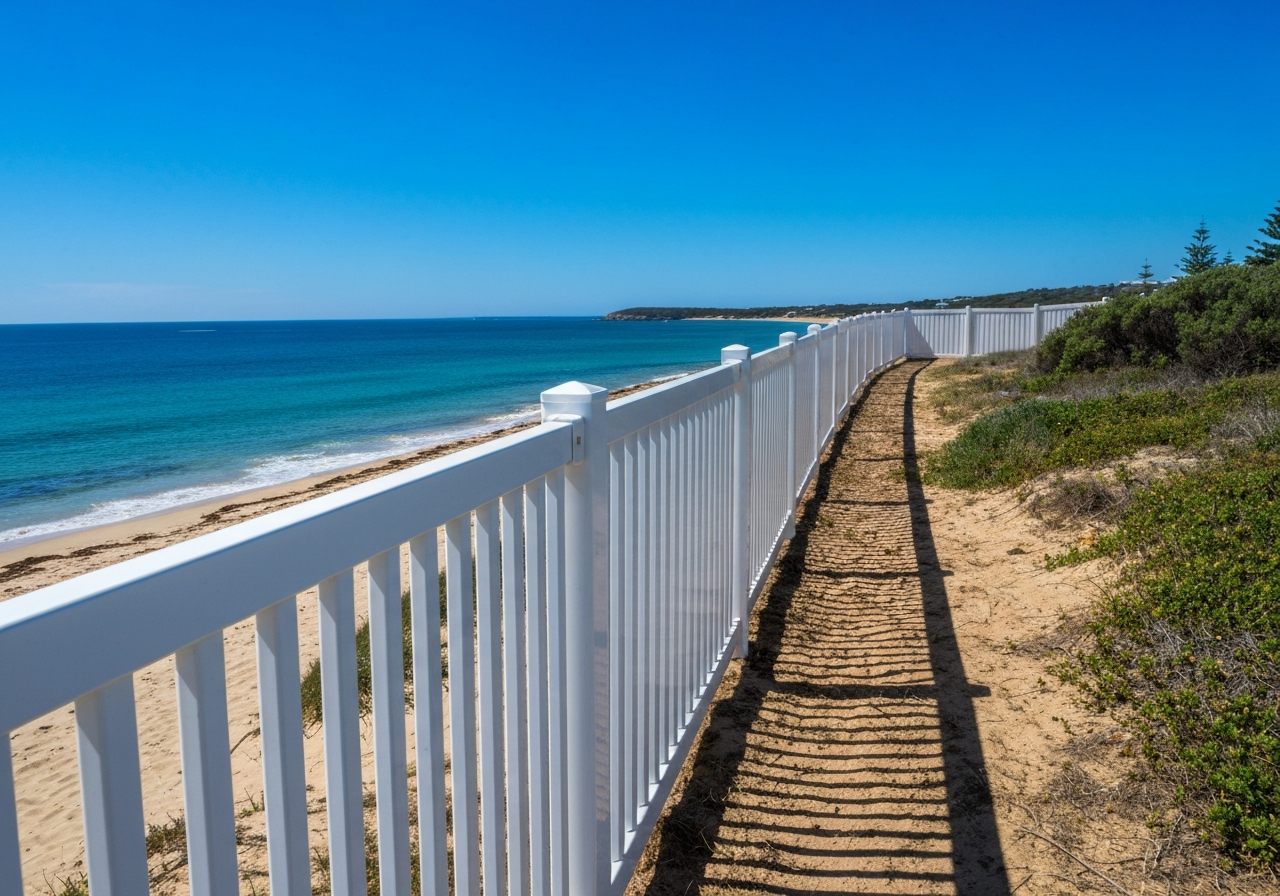
Vinyl systems utilize different attaching methods and can act in a different way under temperature changes. The messages and rails still call for precision, yet the installer's method in setup and attachment influences just how the system remains true.
Metal fencings, including some styles of aluminum, can be a lot more forgiving due to the fact that elements can be readjusted slightly throughout installation. Still, the exact same fundamentals use: corners need to be secured appropriately, articles need to be plumb, and line referrals need to be consistent.
Chain link can look "straight" even when alignment is not perfect since tensioning and material format can mask tiny errors. But if you respect entrance alignment, message stability, and the top rail line, you still require the exact same discipline.
In other words, even if the fence style makes small troubles much less apparent, the underlying concepts of straight lines and level blog posts stay the difference between a fencing that looks strong and one that looks patched.
How long it takes, and why rate can be a false economy
Homeowners occasionally seem like they are being offered on speed. "We can obtain it performed in two days" can sound appealing. The trouble is that speed can minimize the time spent on format checks, supporting, and accurate article settings.
A fence timetable should reflect the number of articles, the website conditions, and the curing or stablizing time required by the selected message base method. If a staff is competing through article placement and rails without allowing stability steps, imbalance issues can appear during rail setup, or worse, after the fencing is ended up and the bases settle.
This award winning fence company is where experience shows. The most effective fencing company might not constantly be the fastest theoretically, however their timelines generally reflect realistic installation and quality assurance steps. A fence that increases quickly yet needs rework is not efficient. It costs extra in labor best-rated fence company and materials, and it disrupts your plans at the worst time, when you anticipate the job to be done.
Final information that safeguard your line and level over time
Even after the fence looks precisely install day, tiny decisions at completion can impact long-term performance.
Finishing touches like constant bolt positioning, appropriate rail accessory, and correct therapy of cut sides can influence exactly how components continue to be stable. Water drainage and bottom clearance additionally issue, especially in wet weather condition. A fence line that holds water against articles or traps particles at the base can move visually and structurally over time.
If gates become part of your task, gateway equipment needs cautious placement and thoughtful adjustment. Gates amplify misalignment since they relocate. A fencing may appear straight when you consider it statically, but a gate that drags or will not lock can expose that posts or rails are not straightened in addition to they need to be.
The best fencing installers deal with gateways as a precision part. They consider how the opening will act with moisture, temperature, and regular use.
Choosing the appropriate installer for your fencing goals
If you are seeking Best fencing installers, your goal is not just a fence that is set up. Your objective is a fence that stays straight and level in a way you can see from throughout your backyard, which continues to work smoothly year after year.
The best indicators often tend to be process-based: stable format recommendations, disciplined blog post leveling with supporting and checks, and clear choices regarding incline and quality transitions before mounting the mass of the fencing. Those variables are not glamorous, but they are the difference in between "looks good today" and "looks right for the long haul."
When you ask the appropriate concerns and focus while work begins, you will generally understand promptly whether the team has the habits that produce real lines. And once you do, the remainder of the project tends to really feel calmer, since you are not thinking regarding the quality behind the finished fence.